PLA vs PETG vs ABS vs ASA vs TPU: Which Filament to Choose
PLA vs PETG vs ABS vs ASA vs TPU comes down to one question: where will the part live and what will it endure? For most indoor, decorative, or light-duty parts, PLA is the right answer — it's the cheapest, tied with PETG and ABS, and prints the cleanest. The other four materials exist for specific conditions PLA can't handle. Here's the practical breakdown so you can choose confidently.
PLA vs PETG vs ABS vs ASA vs TPU: quick comparison
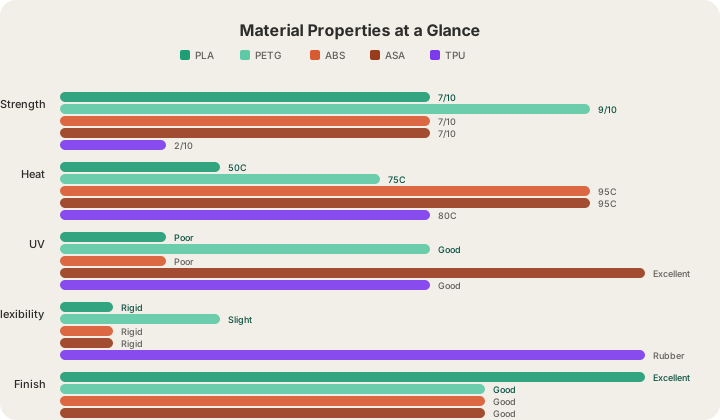
| Property | PLA | PETG | ABS | ASA | TPU |
|---|---|---|---|---|---|
| Cost (X3D, all-in) | $0.12/g | $0.12/g | $0.12/g | $0.14/g | $0.25/g |
| Strength | Good | Very good | Good | Good | N/A (flexible) |
| Heat resistance | ~50°C | ~75°C | ~95°C | ~95°C | ~80°C |
| UV / outdoor | Poor | Good | Poor | Excellent | Good |
| Flexibility | Rigid | Slightly flexible | Rigid | Rigid | Rubber-like |
| Surface finish | Excellent | Good (glossy) | Good | Good | Matte |
| Eco profile | Plant-based | Recyclable | Petroleum | Petroleum | Petroleum |
PLA — the default, for good reason
PLA (polylactic acid) is plant-derived, prints with crisp detail, and comes in the widest color range. Every product in our store — desk clocks, lamps, organizers — is printed in PLA because for indoor objects it's unbeatable on finish and cost.
Choose PLA for: decor, figurines, prototypes, organizers, gifts, anything indoors. Avoid for: a car dashboard in summer (it deforms around 50°C), long-term outdoor use without UV coating.
PETG — the functional all-rounder
PETG is the same polymer family as water bottles: tougher than PLA, slightly flexible (so it bends before it breaks), water-resistant, and fine outdoors in moderate climates. It's the go-to when something needs to survive real-world use.
Choose PETG for: brackets, clips, planters, mechanical parts, food-adjacent containers, anything that takes repeated stress. Trade-off: slightly less crisp detail than PLA, glossier surface that may show layer lines more.
ABS — heat tolerance champion
ABS is the classic engineering plastic (think LEGO bricks). Its claim is heat resistance to ~95°C and good impact toughness. It can also be vapor-smoothed with acetone for a glossy injection-molded look.
Choose ABS for: parts near heat sources, automotive interior parts, enclosures for electronics that run warm, parts that need post-processing. Trade-off: UV exposure degrades it quickly — for outdoor use, choose ASA instead.
ASA — built for year-round outdoor use
ASA is essentially ABS re-engineered for weather: the same heat resistance plus excellent UV stability. It's the material for anything that lives outside year-round without fading or becoming brittle.
Choose ASA for: garden fixtures, exterior mounts, signage, drone parts, anything in direct sun for months or years. Trade-off: the most expensive rigid option at $0.14/g — only pay for it when sunlight is actually in the spec.
TPU — when the part needs to bend
TPU is a flexible, rubber-like polymer. Parts compress, stretch, and bounce back — think phone cases, gaskets, or vibration dampeners. It's a fundamentally different material class from the rigid four.
Choose TPU for: phone cases, seals, bumpers, wheels, wearables, vibration dampeners, hinges that flex thousands of times. Trade-off: fine detail is softer, rigid structural features (snap-fits that should stay rigid) won't work, and at $0.25/g it is the dearest of the five, a little over twice PLA.
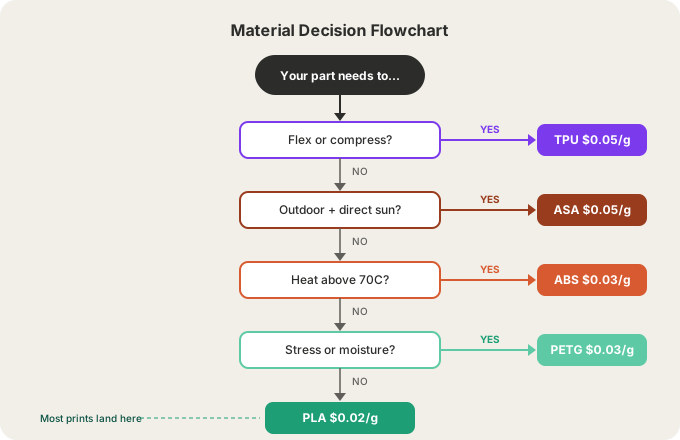
The five-second decision guide
- Will it flex by design? → TPU
- Will it live outdoors in direct sun? → ASA
- Will it see sustained heat above ~70°C? → ABS (indoors) or ASA (outdoors)
- Does it take mechanical stress or moisture? → PETG
- None of the above? → PLA, and pocket the savings
You don't have to commit blind
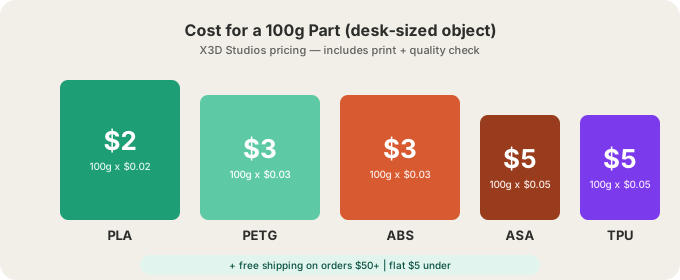
On our Print & Ship page, the price updates live as you switch materials — a 100g part is $12 in PLA vs $14 in ASA, so the "should I pay for ASA?" question always has a concrete number attached. And if you're starting from an idea rather than a file, generate the model with AI first; every model is validated to be printable in any of the five materials.
Frequently asked questions
Is PETG stronger than PLA?
In practice, yes: PETG is tougher than PLA and slightly flexible, so it bends before it breaks. Among common FDM plastics, PETG offers the best practical toughness-to-printability ratio. ABS is more impact-resistant but harder to print large parts without warping. For pure tensile strength, nylon (PA) beats both but requires specialized equipment.
Is PLA really eco-friendly?
It's plant-derived (typically corn starch) and industrially compostable, with lower printing energy than ABS/ASA. /docs/materials has the rate and the use case for each. It won't biodegrade in a landfill, but it's recyclable in commercial facilities.
Can I 3D print food-safe parts?
PETG is the usual choice for food-adjacent items since it's the same polymer family as food-grade PET. However, FDM layer lines can harbor bacteria — use a food-safe epoxy coating for anything in sustained food contact, or consider one-time-use items only.
Which material for replacement parts?
Match the original's job: a flexing tab → TPU; a heat-exposed knob → ABS; an outdoor bracket → ASA; a load-bearing clip → PETG; a decorative cover → PLA. When in doubt, PETG handles the widest range of real-world conditions.
Still unsure? Upload your model on our Print & Ship page, toggle materials, and see the price difference instantly. For full cost math, see our guide on how much custom 3D printing costs.
Ready to get started?
Upload a 3D model for instant pricing, or generate one with AI.